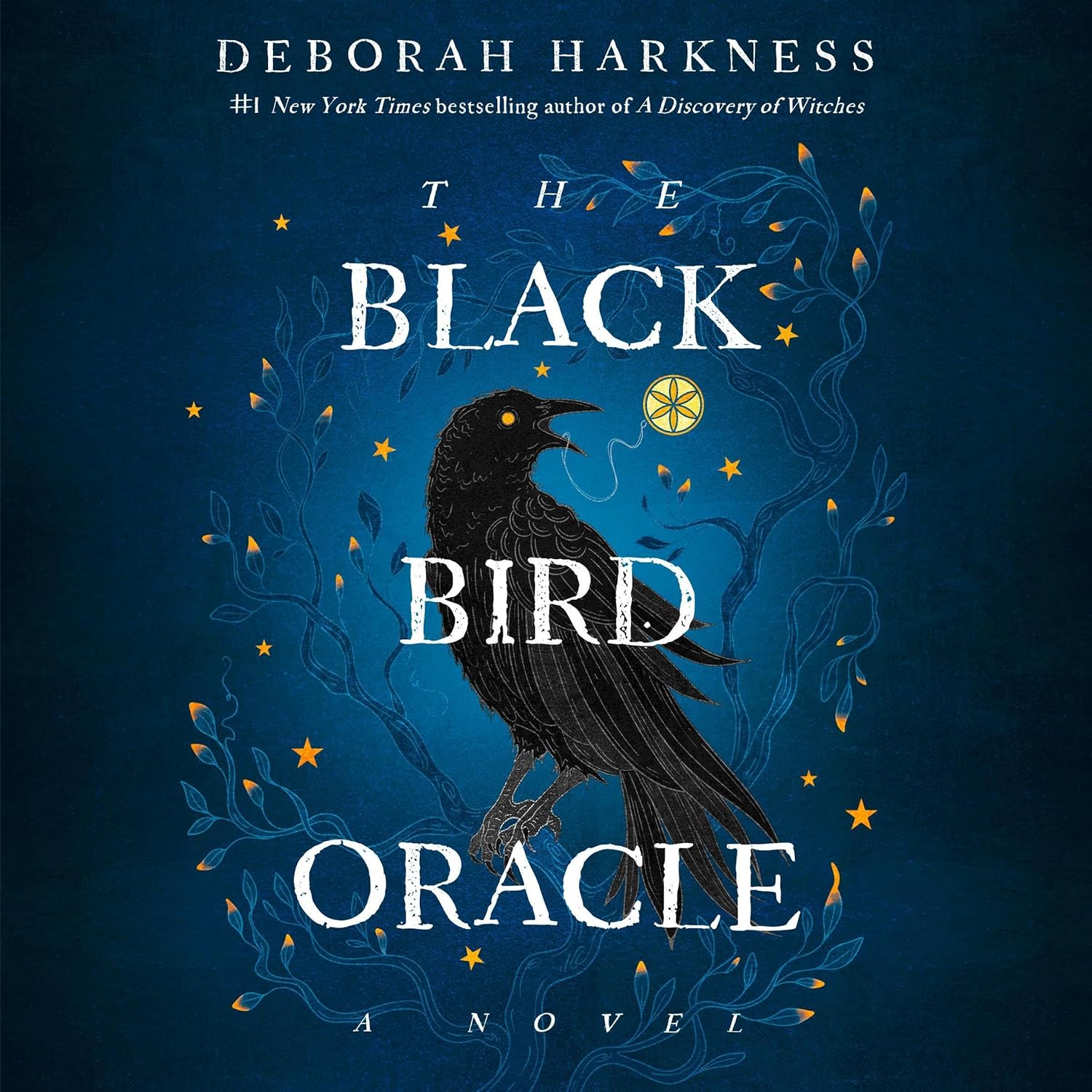
Diana Bishop journeys to the darkest places within herself—and her family history—in the highly anticipated fifth novel of the beloved #1 New York Times bestselling All Souls series.
Deborah Harkness first introduced the world to Diana Bishop, Oxford scholar and witch, and vampire geneticist Matthew de Clairmont in A Discovery of Witches. Drawn to each other despite long-standing taboos, these two otherworldly beings found themselves at the center of a battle for a lost, enchanted manuscript known as Ashmole 782. Since then, they have fallen in love, traveled to Elizabethan England, dissolved the Covenant between the three species, and awoken the dark powers within Diana’s family line.
Now, Diana and Matthew receive a formal demand from the Congregation: They must test the magic of their seven-year-old twins, Pip and Rebecca. Concerned with their safety and desperate to avoid the same fate that led her parents to spellbind her, Diana decides to forge a different path for her family’s future and answers a message from a great-aunt she never knew existed, Gwyneth Proctor, whose invitation simply reads:
It’s time you came home, Diana.
On the hallowed ground of Ravenswood, the Proctor family home, and under the tutelage of Gwyneth, a talented witch grounded in higher magic, a new era begins for Diana: a confrontation with her family’s dark past, and a reckoning for her own desire for even greater power—if she can let go, finally, of her fear of wielding it.
How was it?
I’ve been riding with Deborah Harkness’s All Souls series for a while now. Honestly, I thought it wrapped up neatly as a trilogy. The first three books were…satisfying, I loved the TV adaptation, and then came book four… which, if I’m being blunt, felt like filler of a story we already knew. So when The Black Bird Oracle dropped, I wasn’t rushing to pick it up; in fact, I randomly found out it existed.
So, here I am.
It took me a while to get back into the groove. I picked it up, put it down, and for a stretch, I wasn’t even sure I’d finish it. But slowly, the world of magic, history, and witchy lore pulled me back in. Harkness still has that ability to weave an atmosphere that’s hard to resist, even when the pacing isn’t quite there.
What I did enjoy: the deeper dive into Diana’s family and the darker craft we only really heard whispers about in the original trilogy. Those chapters are genuinely enthralling and gave me a reason to keep going. There’s also a real sense of forward motion; this isn’t just rehashing old stories with added details. It does push the plot forward, which I appreciated.
However, a few things nagged at me. I can’t tell if it’s my memory of the earlier books that’s fuzzy or if there’s a bit of retconning going on, but some plot points didn’t sit right with me. And while this book entertained me, about three-quarters in it became clear: this is really just a big prequel setting the stage for whatever comes next. It’s not as self-contained as it should’ve been, which left me a little unsatisfied.
So where do I land? The Black Bird Oracle is not useless filler like Time’s Convert (All Souls 4), but it also doesn’t quite recapture the magic of the original trilogy. It’s entertaining, it’s atmospheric, and it adds some lore fans will appreciate. But it also feels like Harkness is stretching this series as far as she possibly can, and that’s a tricky balance to maintain.
Will I read the next one? Probably. But I wish this one had felt more like its own complete story instead of just a setup.
If you want to support this site, help by getting me a coffee from the link below:



One thought on “The Black Bird Oracle (All Souls 5) by Deborah Harkness | Book Review”