Expanding on the vast Dune mythos is no small feat, I haven’t read all of the book and I know that. Dune: Prophecy dives headfirst into the murky origins of the Bene Gesserit, set over ten millennia before Paul Atreides’ rise. Drawing inspiration from Brian Herbert and Kevin J. Anderson’s Sisterhood of Dune, the series ambitiously explores themes of power, sacrifice, and destiny, all while crafting a political drama draped in the epic sci-fi tapestry of Frank Herbert’s universe. Across its six episodes, the show delivers moments of brilliance but occasionally stumbles under the weight of its aspirations and source material.
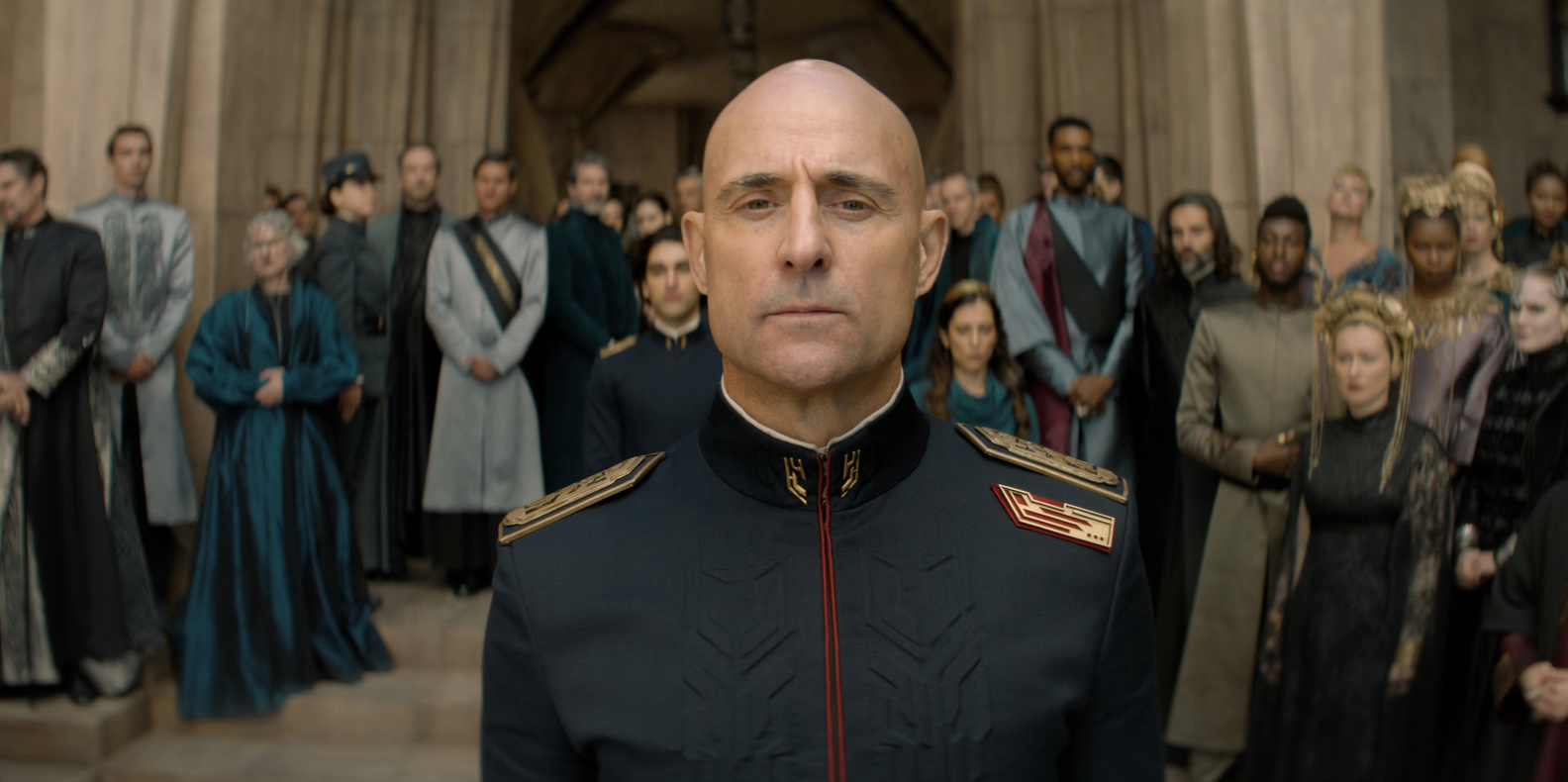
As mentioned before, from the start, the series dazzles with its visuals. The production design, from the austere landscapes of Wallach IX to the intricate courtrooms of the Imperial House, rivals the grandeur of Denis Villeneuve’s cinematic vision. This attention to detail extends to the cinematography, which makes excellent use of shadow and light to evoke both the mystery and the menace central to the Bene Gesserit’s rise. The frequent use of eye imagery is a subtle yet powerful nod to the show’s focus on foresight and manipulation.

The Sisterhood Takes Center Stage
The narrative is anchored by Valya (Emily Watson) and Tula Harkonnen (Olivia Williams), two sisters whose tumultuous journey sets the tone for the Bene Gesserit’s actions. Their dynamic, marked by ambition and loyalty, is the emotional core of the series. Valya’s calculated maneuvering contrasts sharply with Tula’s more idealistic approach, creating a compelling tension that underscores the show’s central themes.
Performances from the lead cast are largely strong, particularly in their portrayal of the Harkonnen sisters – young and older versions. Subtle gestures and layered expressions convey the weight of their choices and the legacy they’re trying to carve. Supporting characters, like Desmond Hart (Travis Fimmel), add intrigue, although some feel underutilized. Notably, Tula’s quiet intensity and her moments of defiance shine brightest, giving viewers a character to root for amidst the political machinations.

Balancing Heritage and Innovation
While Dune: Prophecy seems to respect its source material, it takes creative liberties that may not sit well with everyone. The introduction of abilities like burning enemies with thought and the overt mysticism surrounding Shai-Hulud shift the tone of the Dune universe toward the fantastical. These choices, while intriguing, depart from Frank Herbert’s pragmatic and philosophical critique of power, religion, and human nature. The grounded, systemic approach of the novels – where divine claims are tools for manipulation – is diluted in favor of more supernatural storytelling.
This difference of feel raises questions for me about the show’s identity. Is it a faithful continuation of the Dune legacy, or a reimagining meant to capture broader audiences? While the answer might be somewhere in between, the shift in tone could alienate viewers drawn to the hard science fiction elements of the original novels.

A Slow-Burn Epic
The pacing of Dune: Prophecy is deliberate, focusing on intricate worldbuilding and character-driven drama over action. While this approach creates an immersive experience, it tested my patience flirting with my limits. The show manages to shine in its quieter moments – conversations steeped in subtext, glances that convey years of history, and the tension of secrets held too tightly.
Yet, as the series progresses, it stumbles in maintaining consistency. Episode 4’s revelations veer sharply into uncharted territory, introducing elements that feel out of sync with the universe’s established rules. I felt we were getting closer to the Terminator franchise and sci-fi fantasy tropes than the grounded realism that makes Dune resonate.

A Promising Future
Despite its flaws, Dune: Prophecy ends on a high note. The finale ties together its threads beautifully, setting the stage for a second season brimming with potential. If the series can refine its writing and strike a better balance between philosophical depth and dramatic spectacle, it could become a standout addition to the Dune canon.
Ultimately, Dune: Prophecy is a worthy yet imperfect attempt to expand the Dune universe. It invites us into a pivotal chapter of its history, asking us to grapple with questions of fear, power, and ambition. While it doesn’t quite achieve the greatness of Herbert’s novels or Villeneuve’s films, it leaves us with a tantalizing promise: the best may still be yet to come.
If you like this content, please consider supporting the site by getting me a Coffee to keep it going:

 Worn Out Spines
3 thoughts on “Dune: Prophecy (TV Series Season 1 Review) | A Bold but Uneven Journey”